Can we add a setting (or something) to be able to change the number of steps in a local graph view? I’d love to be able to see what’s 3 steps out, or 4 steps out, or change back to a single step like we have currently.
Would be a cool feature to have.
Similar thread: Second Degree Connections In Graph View
I would love the option to see second (and maybe third) degree backlinks in the graph view. A separate color to distinguish them would look good too. Maybe a green or pink that splits off from the purple.
What is a second degree backlink? Or third?
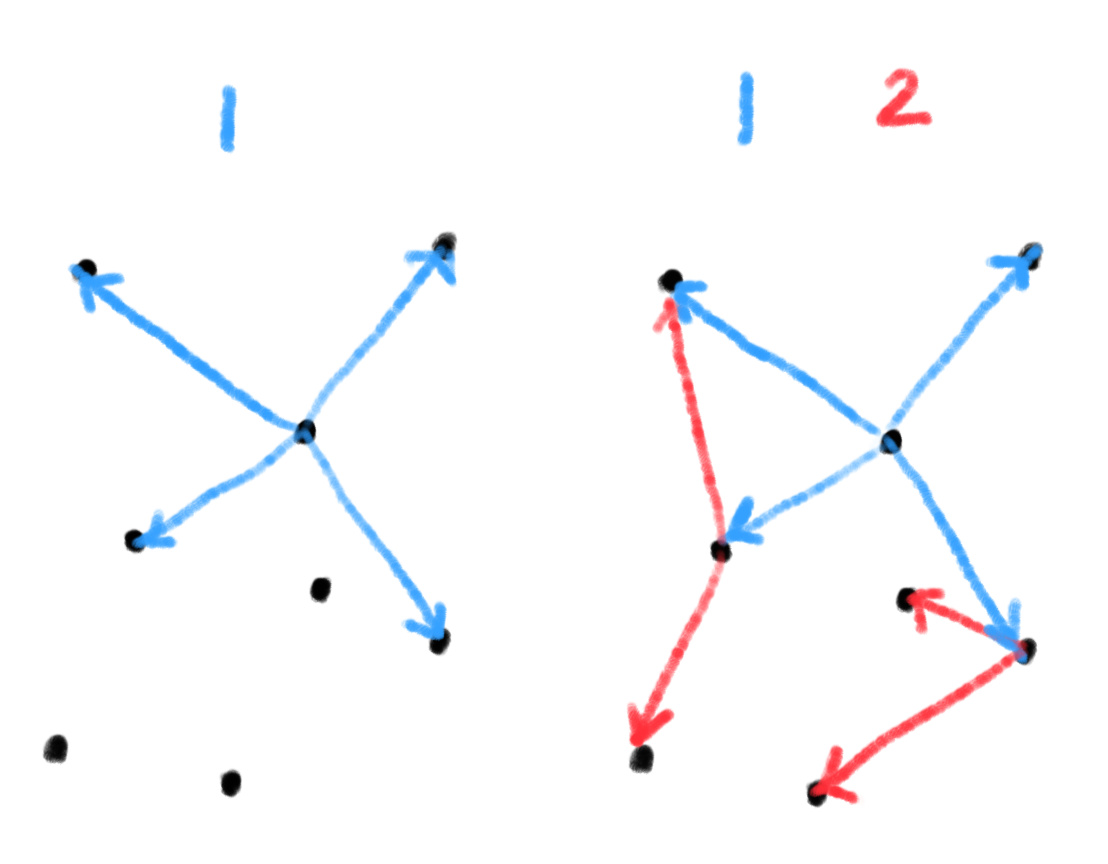
I imagine it is something like…
First degree:
a → b
b → c
c → d
Second degree:
a → c
b → d
Third degree:
a → d
… but I am only guessing.
I’m certain it means seeing connections of connections. Seeing 2 levels deep from the note you are querying.
I work in 3D applications that have network connections (Maya, Houdini, etc.), and in a node view, we often want to track an input 2 or 3 or more nodes down the chain. (Also, if you try and visualize all those connections, you can end up with a huge complex graph very quickly.)
Here is a screenshot of one of my simpler files in Autodesk Maya. Usually to find things via nodes, it is better to traverse one connection at a time, anyway. This kind of broad overview borders on useless. Unless you are scripting it, and following connections and filtering via specific node types.
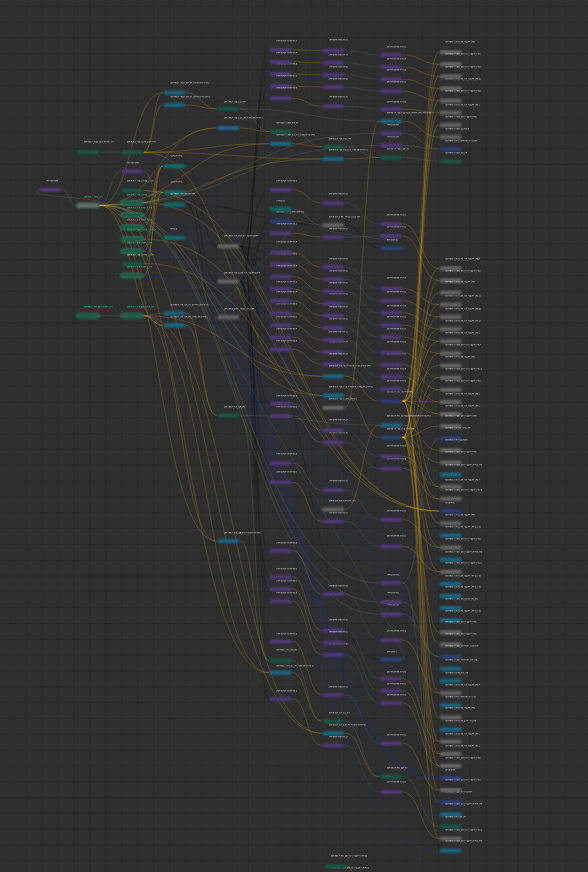
Maya’s graph is dynamic. The arrangements of the node completely change depending on what you are trying to view. Houdini’s is a procedural graph, where the graph actually means something. If you had a node network that was more like an ordered, static mind-map, then the hierarchy becomes more useful, in my opinion. Here is a simple file in Houdini. The arrangement of the nodes doesn’t change unless you change it, so traversing down the connections makes a lot more sense. Notice, I also have embedded notes in the graph. And the orange section is a group, containing nodes.

Just some ideas. In a free-flowing dynamic network like Obsidian (as of now), seeing so many connections may be less useful than you think. But this is without knowing what you are trying to do or see exactly.
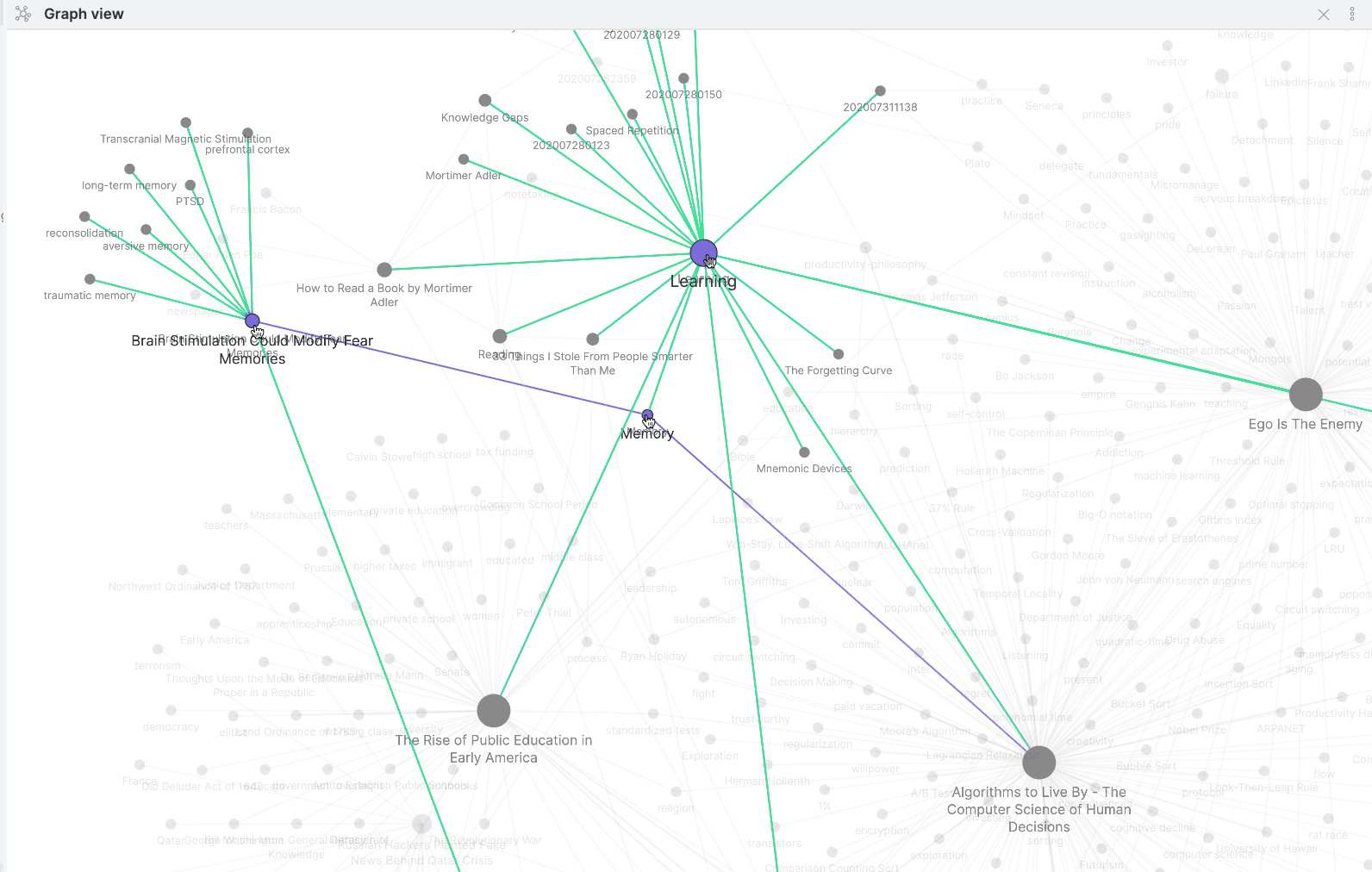
In my opinion, the use of color coding can complicate the perception of information, make the interface less minimalistic. Also, the use of colors can cause problems for some people with visual impairments.
It seems to me that using a double line to display backlinks can help avoid color coding.
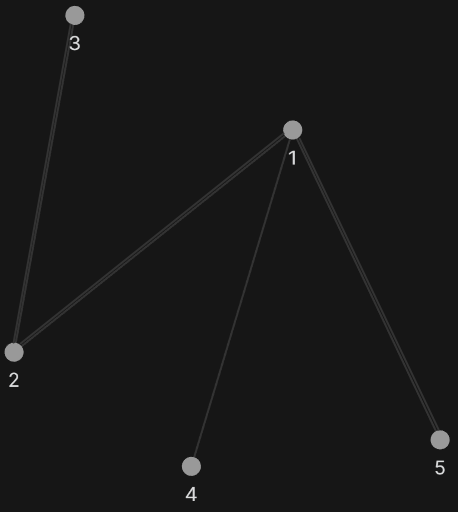
To display links of the second level and below, it may be useful make a setting item in viewing parameters of the graph
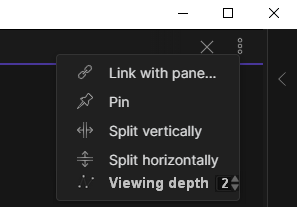
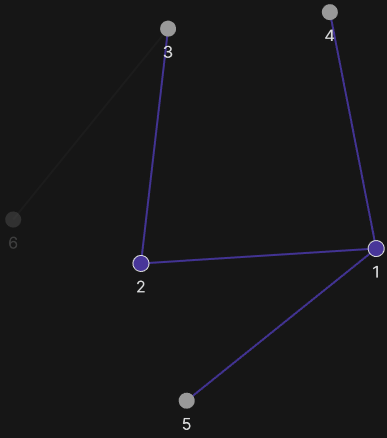
Pinning the graph keeps it in place when you click a node? Pinning the graph keeps it in place when you click a node.
I somehow missed this in the documentation/help vault. Thanks for the screenshot, @hazgon.
Would love this idea. Also being able to select multiple nodes to see connections between them and control the number links visible between them in a similar fashion.
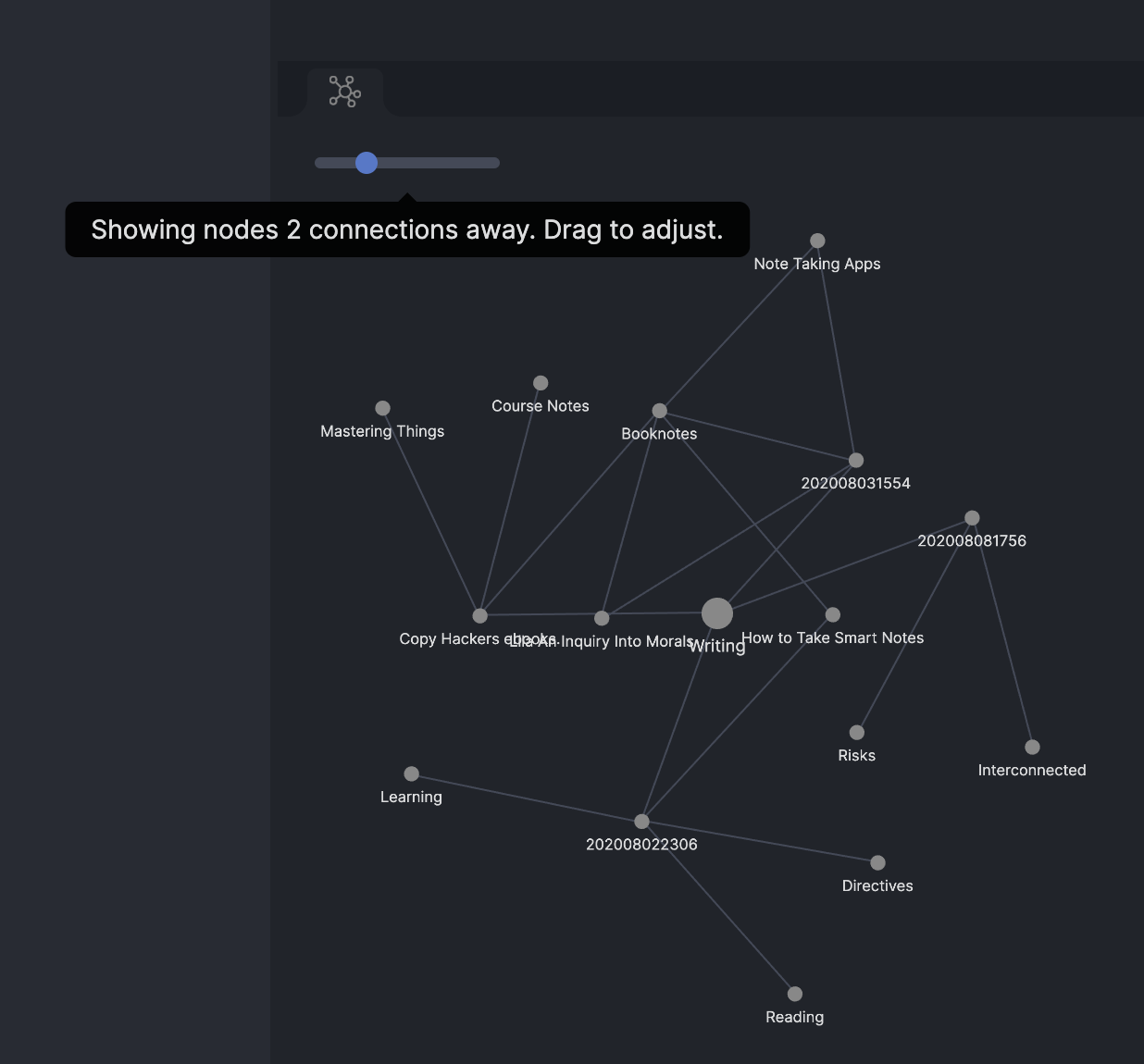
That looks fantastic but for the life of me I can’t find how to set the number of steps like that shown - I am using windows 0.96. Thanks
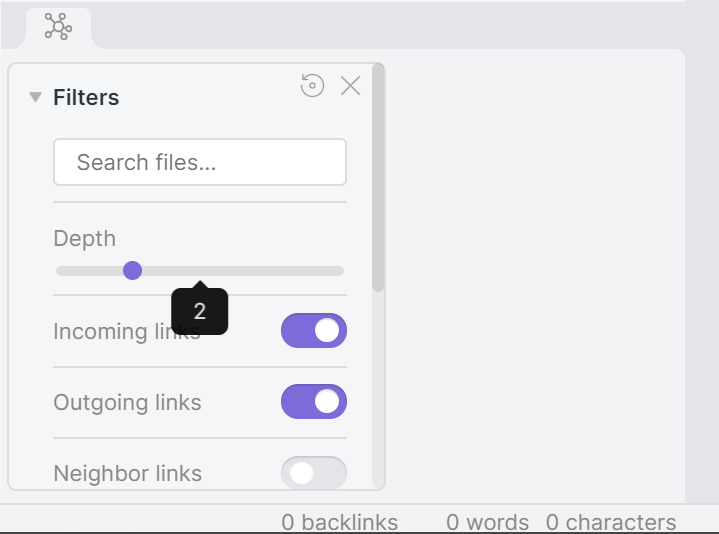
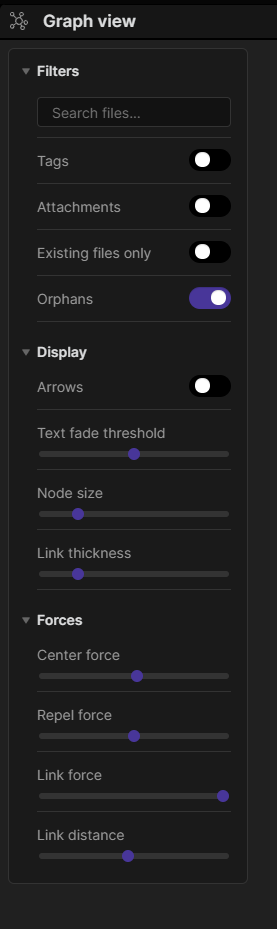
@ds2393 You’re showing the settings for Graph View.
Number of steps is available in Local Graph View
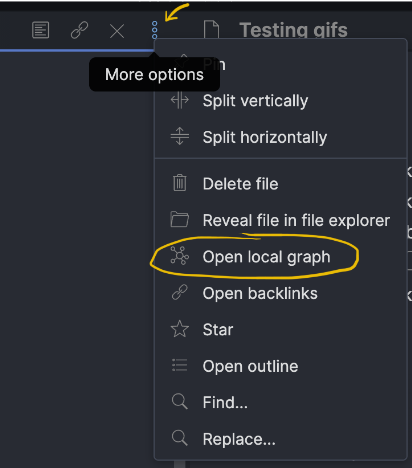
Fantastic, thanks was puzzling on this for ages. This is brilliant - as is Obsidian generally!