Disclaimer
- Is this plugin open source? Yes (MIT): GitHub - boxofdog/cash-hemorrhage: An Obsidian-based budgeting plugin featuring SimpleFIN transaction linking and variable income accounting. · GitHub
- Is this plugin completely free? Yes. The optional bank sync uses SimpleFIN Bridge, a separate paid service ($15.00 USD annually for personal use), but the plugin itself costs nothing, and CSV import works without it.
- Is this plugin vibe-coded beyond my ability to comprehend how it works? Yes. It was built by steering Claude and testing it personally in daily use. I don’t/can’t read the code line by line. To compensate, it has about 2,700 automated checks that run before every release, and you’re more than welcome to read the source.
- Community Directory: Budget Tracker
Budget Tracker
Most budgeting tools tell you where your money went; “here’s this envelope,” “here’s this subscription that hunts discounts.” Budget Tracker answers a different question: what do I actually have available right now, after everything I’m committed to paying?
It reserves upcoming bills, debt payments and loan installments first, so what’s left for the pay period is real spendable money. The goal is to keep the weekly allowance meaningful, and “money I had to spend” separate from “money I chose to spend.” It works the same whether your income is steady or irregular.
What it does
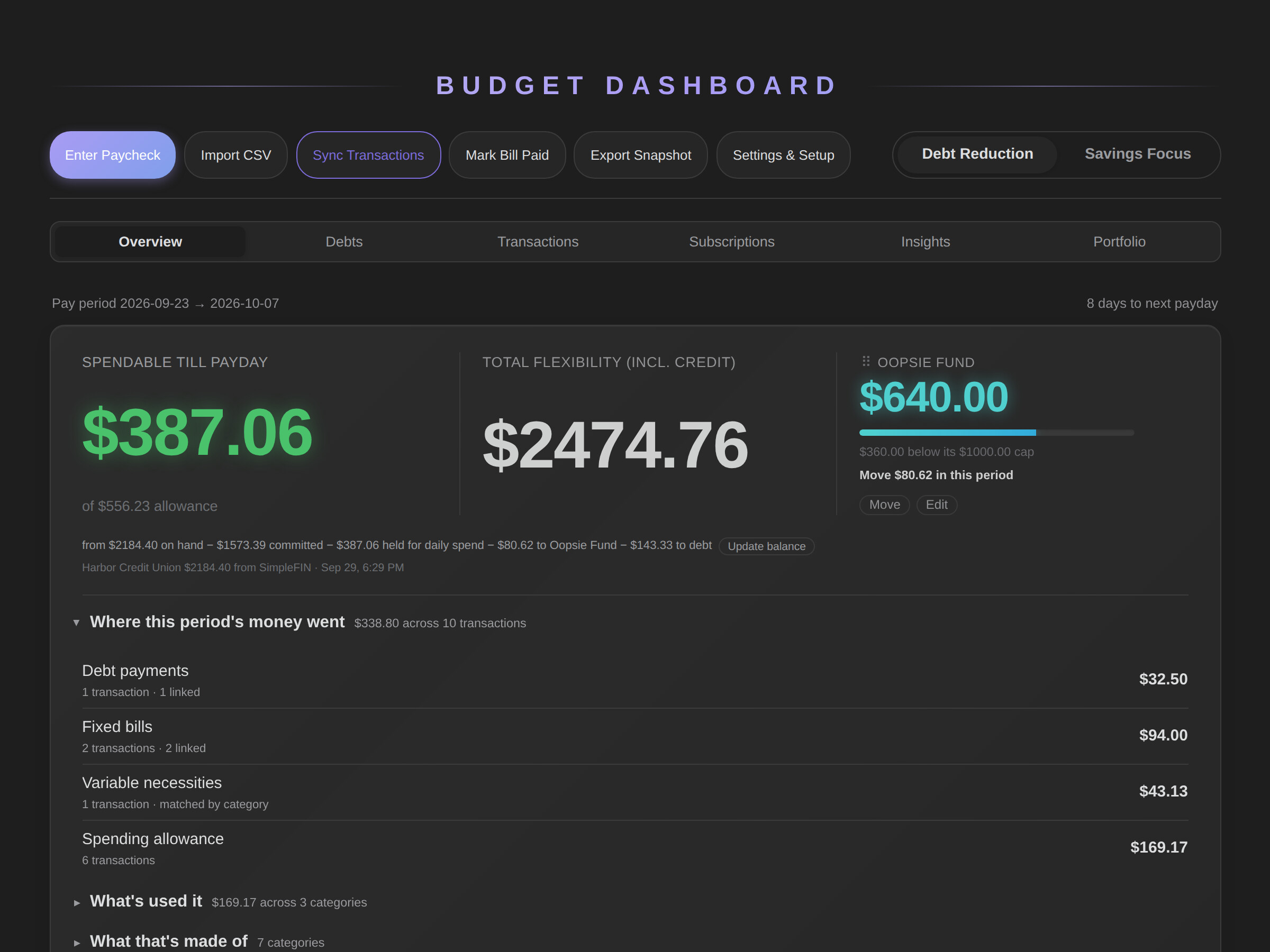
- Pay-period dashboard: spendable cash till payday, total flexibility, and where this period’s money went
- Debts: credit cards, buy-now-pay-later plans and loans (car, mortgage, student, personal), with payoff projections
- Two postures for spare money: Debt Reduction or Savings Focus, switchable any time
- Savings goals and capped funds (an emergency cushion that refills toward a limit)
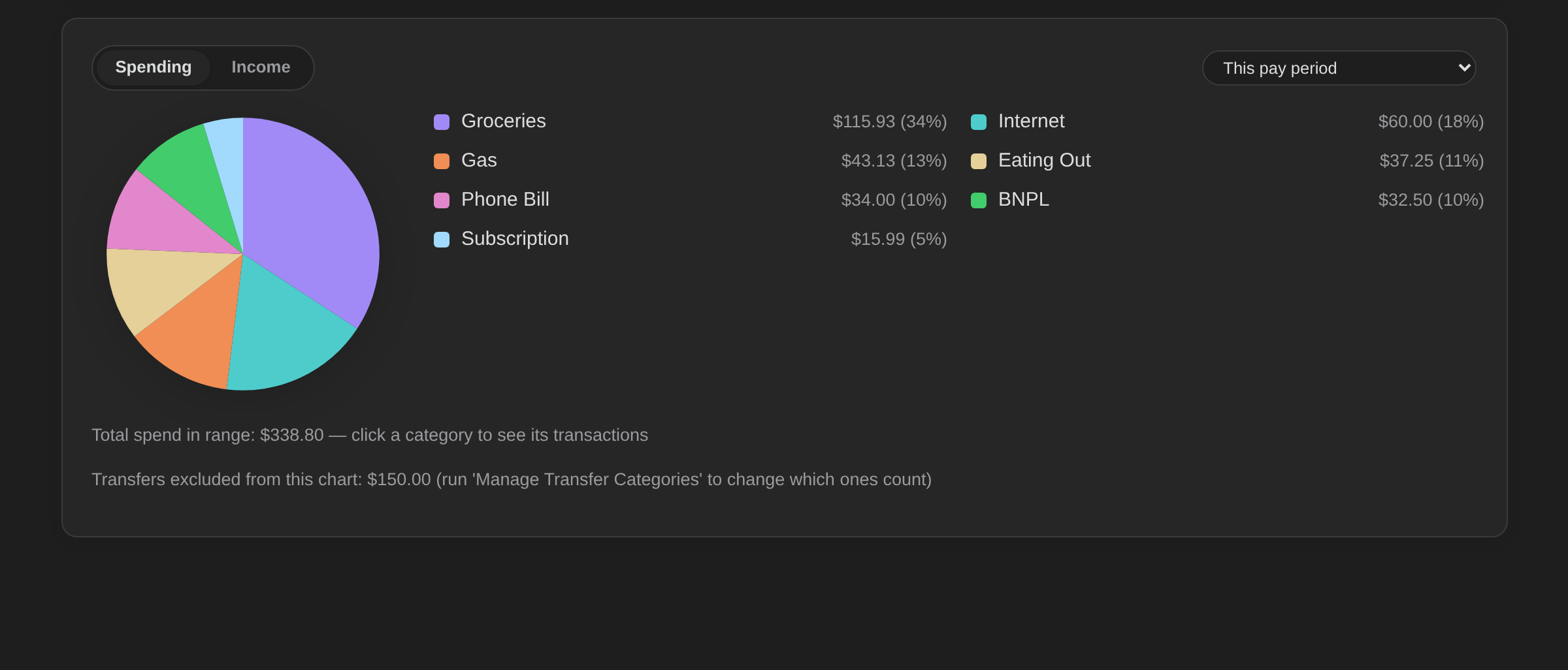
- Bills, subscriptions and budget targets, with charts
- Transactions from a bank CSV, or optionally from SimpleFIN Bridge
How it categorizes. Nothing is guessed. You label each merchant once, with “Apply to all,” and matching transactions follow. Or, you can match individual transactions that deviate from an established category (e.g., ‘Snacks’ from a ‘Groceries’ merchant). Setup takes some effort up front, but you always know where everything went, and there’s no algorithm to correct.
Privacy. Everything is stored as JSON inside your vault. There’s no telemetry. The only network calls are three to SimpleFIN, and only if you connect it. Your SimpleFIN access URL is kept in Obsidian’s secret storage, not in your vault files.
Things to know
- SimpleFIN can be flaky. Sometimes you may need to hit “Adjust” on the SimpleFIN Bridge website before more recent transactions appear.
- The portfolio statement importers (Vanguard, Empower, Schwab) were written from Claude’s general knowledge and need real statements to verify.
- Not financial advice. The numbers are estimates from what you enter.
Bug reports and ideas are welcome on GitHub (issues), or in this thread. I’ll post future updates here.
The main overview panel: