Disclaimer
Is this project open source? Yes
Is this project completely free? Yes
Is this project vibe-coded beyond the author’s ability to comprehend how it works? YesTheme Link In Community Directory: ‘community.obsidian.md/themes/aurenyx’
AURENYX is developed with substantial AI/agent assistance. The design system, requirements, review criteria, QA gates and release decisions are human-directed, while parts of the implementation would require me to inspect and study the code before I could explain them in detail.
AURENYX 1.1 — Cognitive Cartography for Obsidian
See the conflict. Keep the agency.

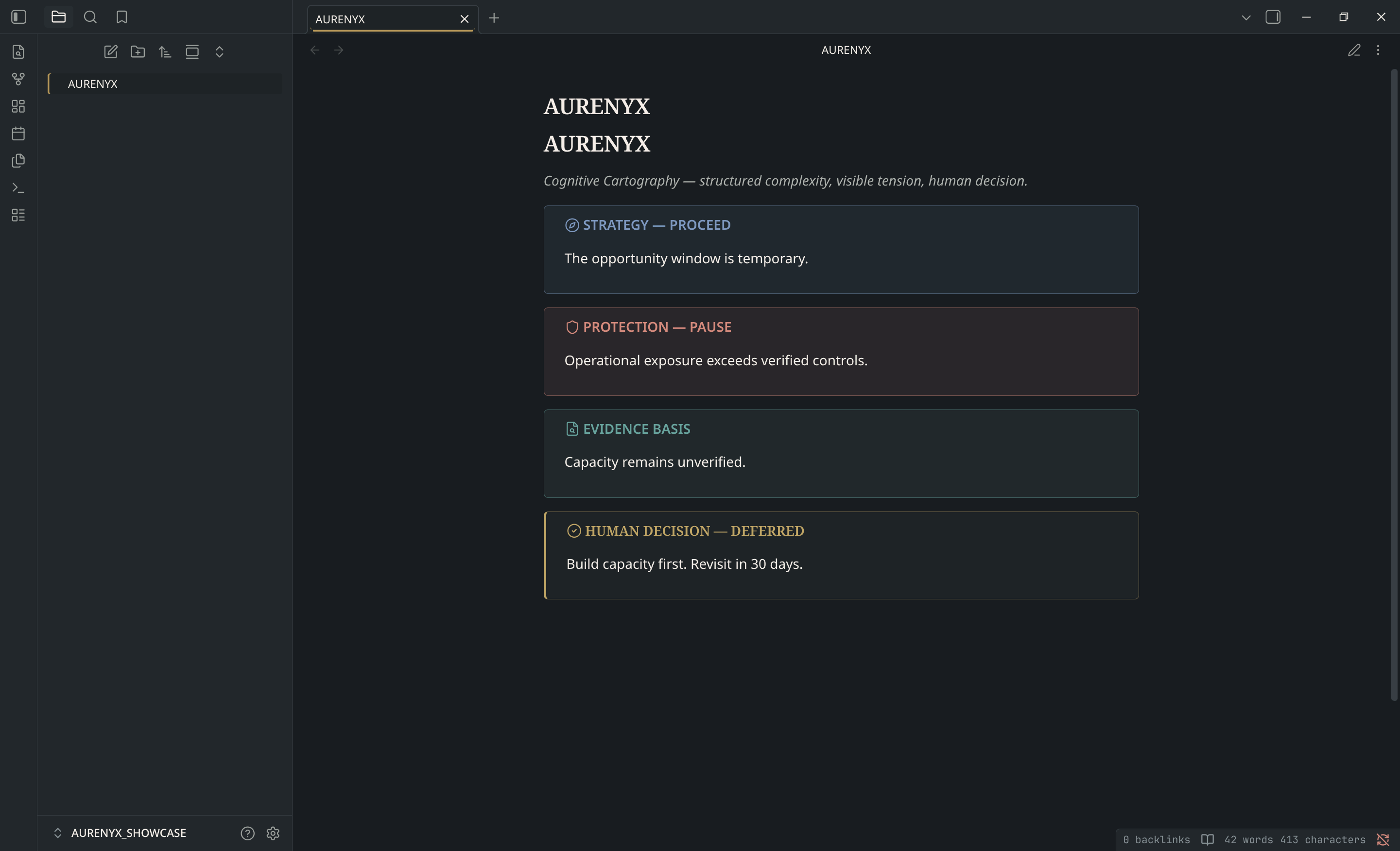
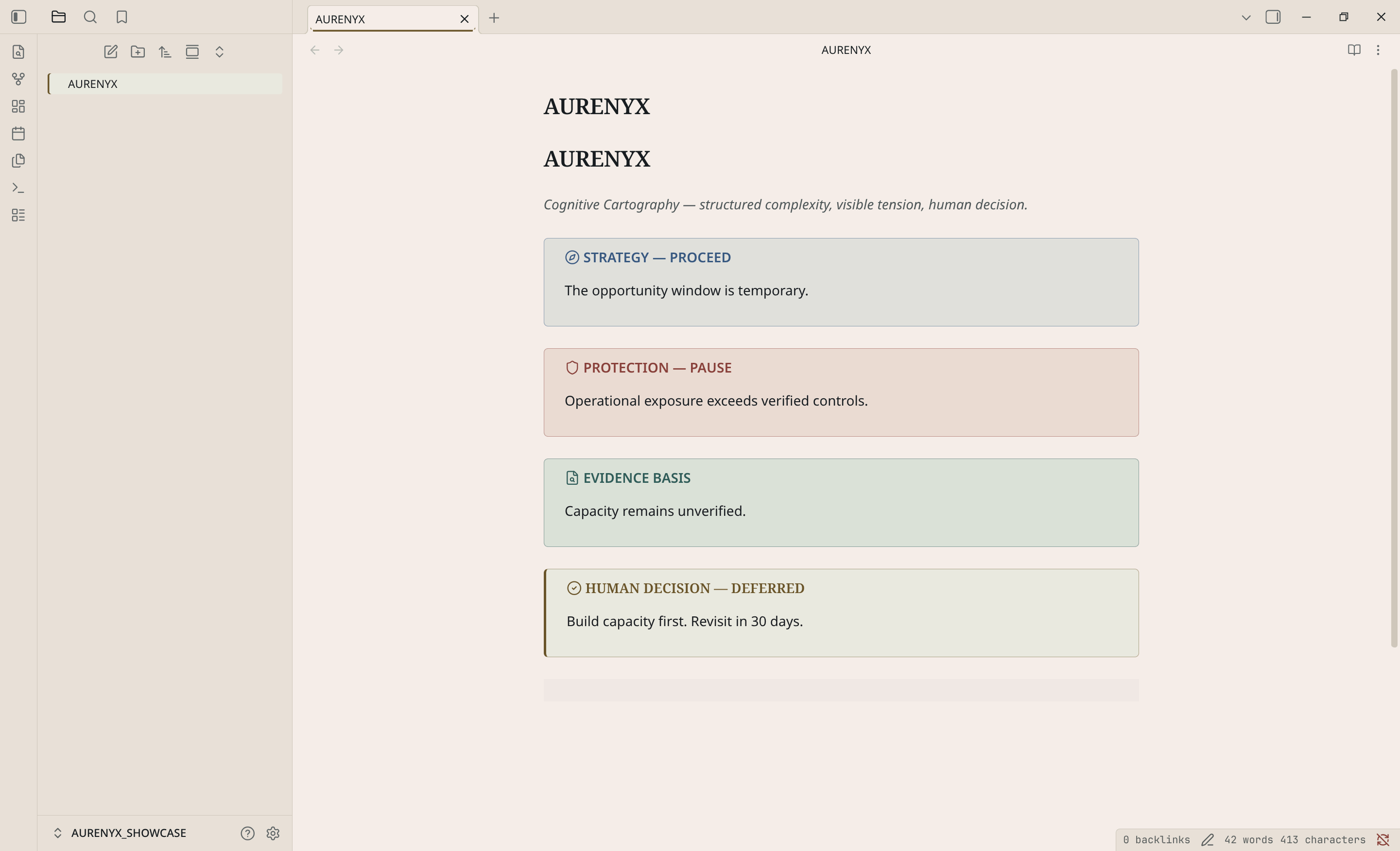
AURENYX is a restrained dark/light Obsidian theme built around structured
complexity, semantic color, visible tension, and explicit human agency.
The idea is simple: preserve native Obsidian behavior wherever possible,
while using structure and color deliberately to make complex information
easier to reason about.
What’s new in 1.1
Native Obsidian Bases integration
- Table, card and list views
- Native grouping, filtering, sorting and editing behavior preserved
- AURENYX-consistent focus treatment in dark and light modes
- Minimal intervention rather than a separate database UI
Responsive and mobile-aware hardening
- Improved readability and contrast in narrow layouts
- Improved mobile-dark navigation, placeholder and destructive-action contrast
- Native modal, scrolling and interaction behavior preserved
- Responsive testing down to 320 CSS px without a breakpoint-heavy redesign
AURENYX also includes semantic callouts for strategy, protection, empathy,
shadow, evidence, conflict, synthesis, dissent and human decisions.
The goal is not to turn every note into a colorful dashboard. Most of the
interface intentionally remains neutral, while color is reserved for
information that carries semantic meaning.
Install
Settings → Appearance → Themes → Manage → search for “AURENYX”
Feedback is especially useful around Bases edge cases, readability in dense
notes, narrow/mobile layouts, and anything where AURENYX interferes with
native Obsidian behavior.